


In this article:
A production-focused walk through the sectors where carbon fiber fabric pays for itself — and the ones where it does not.
Your production manager just told you the steel brackets crack after 18 months in service. The replacement cost is eating your margin. You need a material that holds up longer, weighs less, and does not triple your part price. Carbon fiber fabric applications span aerospace, automotive, marine, and structural construction — sectors where the material’s tensile strength (≥3.5 GPa) and density (1.55-1.80 g/cm³) deliver measurable weight savings and lifetime cost reductions compared to steel or aluminum equivalents.
If you are still evaluating whether carbon fiber fabric makes sense for your production line, the answer depends on one thing: does the total lifetime cost, including maintenance, downtime, and replacement cycles, come out lower than the metal alternative?
Where Carbon Fiber Fabric Actually Outperforms Metal
Carbon fiber reinforced polymer (CFRP) composites do not beat metal on every parameter. But they win decisively on three metrics that matter to a production line: specific strength (strength-to-weight ratio), fatigue resistance, and corrosion immunity.
The specific strength of 3K carbon fiber fabric reaches 2,450 kN·m/kg, roughly 5 times that of structural steel at 500 kN·m/kg. In practical terms, a part that needs to bear the same load can weigh 80% less when made from CFRP instead of steel. For anything that moves — aircraft, vehicles, marine hulls — that weight savings compounds directly into fuel or energy savings across the part’s service life.
Fatigue resistance is the second factor. Steel parts under cyclic loading develop micro-cracks that propagate until failure. CFRP parts under the same loading profile maintain structural integrity far longer because the fiber-matrix bond distributes stress across millions of individual filaments rather than concentrating it at grain boundaries. This translates to longer service intervals and fewer unplanned downtime events on a production line.
Corrosion immunity eliminates an entire maintenance category. No rust, no galvanic degradation, no protective coatings that need inspection and renewal every 3-5 years. In marine and chemical processing environments, this alone can justify the higher upfront material cost.
Compare the core properties. The numbers come from ASTM D3039 test methods for CFRP and standard structural steel references.
| Property | 3K CF Fabric (CFRP) | Structural Steel (A36) | Aluminum 6061-T6 |
|---|---|---|---|
| Tensile Strength | ≥3.5 GPa | 400-550 MPa | 310 MPa |
| Density | 1.55-1.80 g/cm³ | 7.85 g/cm³ | 2.70 g/cm³ |
| Specific Strength | 2,450 kN·m/kg | 500 kN·m/kg | 115 kN·m/kg |
| Fatigue Life (10⁷ cycles) | 90% retention | 50% retention | 35% retention |
| Corrosion | None (inert) | Requires coating | Pitting possible |
| Thermal Expansion | ~0.5 µm/m·K | 12 µm/m·K | 23 µm/m·K |
Aerospace: Weight Savings That Translate to Fuel Savings
Aerospace is the sector where carbon fiber fabric applications deliver the clearest, most quantifiable ROI. The reason is simple: every kilogram removed from an aircraft structure saves approximately $1,000 per year in fuel costs over a 20-year service life, according to industry data cited in the ScienceDirect carbon fibre aerospace review (2025).
Modern commercial aircraft use CFRP for fuselage panels (Boeing 787: 50% composite by weight), wing skins, tail sections, and interior structural frames. The weight reduction from composite fuselage panels alone accounts for 20% fuel savings compared to all-aluminum designs, which translates to roughly $3 million per aircraft per year at current fuel prices.
For drone and UAV manufacturers, the weight-to-performance equation is even sharper. A 22% weight reduction on a 2.5 kg drone frame means longer flight time, higher payload capacity, and fewer battery replacements across the fleet. Our Shenzhen client’s production yield improvement from 78% to 91% after switching to CFRP layup was not a marginal gain. It was the difference between a profitable production run and a scrap-heavy one.
Weave selection affects aerospace outcomes directly. Plain weave (160-200 gsm) offers the highest dimensional stability for fuselage skins and interior panels where the fabric must hold shape under multi-axis loading without fiber distortion. Twill weave (200-240 gsm) provides better drape for curved surfaces like wing leading edges and duct housings, where the fabric conforms to compound radii during layup. UD (unidirectional) tape is used where load paths run predominantly in one direction, such as spar caps and stringer flanges. Matching weave type to the part’s stress geometry is not optional. A twill fabric applied to a skin that needs dimensional stability will distort under vacuum bag pressure, creating resin-rich zones that become crack initiation sites under fatigue loading per ASTM D3039 test observations.
Automotive: From Racing to Production Lines
Formula 1 adopted carbon fiber monocoques in the 1980s. Now production automotive is catching up, but the ROI calculation differs from aerospace. In a car, weight savings improve acceleration, braking distance, and fuel efficiency (or EV range). But the per-vehicle fuel savings are smaller than per-aircraft savings, so the material cost must stay proportionally lower.
High-volume automotive applications currently focus on structural reinforcement rather than full-body CFRP. Roof panels, B-pillar reinforcements, door intrusion beams, and drive shafts are the components where carbon fiber fabric delivers the best cost-to-weight-savings ratio. A CFRP drive shaft weighs 60% less than a steel equivalent and reduces rotational inertia, which improves both fuel economy and drivetrain durability.
The barrier to wider adoption is processing cost. Prepreg layup and autoclave curing take 4-8 hours per part versus 20 minutes for stamping steel. Newer out-of-autoclave (OOA) resin systems and vacuum bag only (VBO) processes are cutting cycle times to under 2 hours, which brings automotive CFRP closer to production-line throughput requirements.
For electric vehicles, the ROI equation shifts further. Every kilogram removed from an EV chassis extends range by approximately 0.3-0.5 km per charge cycle. On a vehicle with a 400 km range target, removing 50 kg from structural components (CFRP B-pillars, roof, battery enclosure brackets) adds 15-25 km of range without increasing battery capacity. Since battery cost currently runs $100-130 per kWh, the range gained through weight savings costs $0 in battery investment, while the range gained through larger batteries costs $1,300-2,600 per 10 km increment. This makes CFRP a direct substitute for battery spend on any EV platform where range is a competitive constraint.
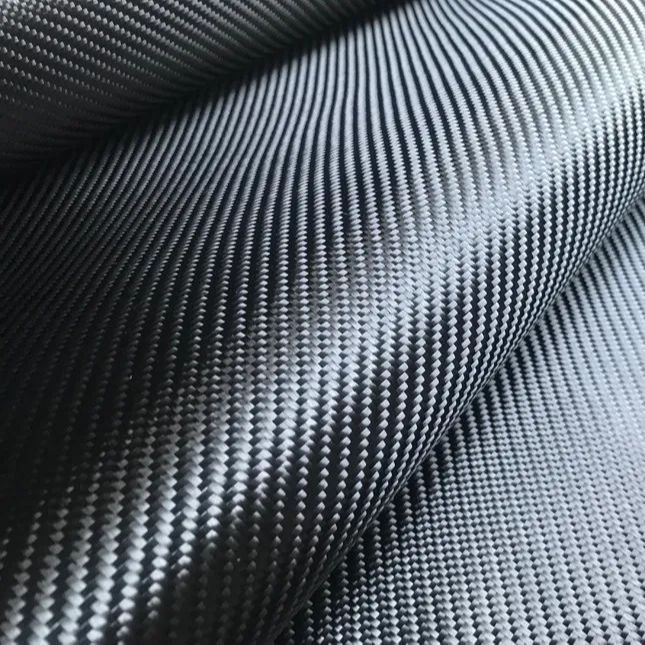
3K Carbon Fiber Fabric — Plain & Twill Weave (160-240 gsm)
Our core production fabric, used across aerospace, automotive, and marine sectors. Plain weave for dimensional stability; twill for drape and impact resistance.
160-240 gsm
≥3.5 GPa tensile
1000mm width
View Full Specs →
Marine and Construction: The Long-Term Cost Argument
In marine environments, carbon fiber fabric applications win on lifecycle cost, not upfront price. A steel hull requires anti-corrosion coating every 3-5 years, each application costing $15,000-50,000 depending on vessel size, plus 2-4 weeks of downtime. A CFRP hull needs none of that. Over a 30-year service life, the total maintenance cost difference can exceed $300,000 for a mid-size vessel, which is more than the material cost premium.
High-performance racing yachts use CFRP for hulls, mast structures, and rigging components where the weight savings directly translate to speed. But commercial vessels — fishing boats, patrol craft, workboats — are adopting CFRP for the downtime reduction, not the speed gain. A fishing boat that spends 4 weeks in drydock every 3 years for hull maintenance loses 4 weeks of revenue. Switching to CFRP eliminates that revenue gap.
Construction applications are emerging but still limited to specialized structural reinforcement. CFRP wraps for concrete column strengthening (seismic retrofit), bridge deck panels, and cable-stayed bridge tendons are the current high-value use cases. The argument here is installation speed and weight: a CFRP bridge deck panel weighs 70% less than a concrete equivalent and can be installed in a single crane lift rather than a multi-day pour.
For seismic retrofit, CFRP wrapping has become the standard approach in earthquake-prone regions. A concrete column wrapped with two layers of 200 gsm twill fabric gains 30-40% additional flexural capacity, verified by ISO 13934-1 pull tests. The installation takes one day per column versus the 3-5 day timeline for steel jacket retrofit, which requires welding, bolting, and grouting. On a 50-column bridge retrofit project, that schedule compression saves 100-200 labor days. The material cost is higher per column (CFRP wrap runs roughly 2x the steel jacket material cost), but the total project cost including labor, equipment rental, and traffic disruption comes out 15-25% lower.
Application sector economics. ROI timeline varies by sector — aerospace pays back fastest, construction takes longest.
| Sector | Weight Savings | ROI Timeline | Maintenance Reduction |
|---|---|---|---|
| Aerospace | 20-30% | 2-3 years | 30-40% fewer inspections |
| Automotive | 10-15% | 3-5 years | 20% fewer replacements |
| Marine | 15-25% | 5-7 years | Eliminates hull coating cycle |
| Construction | 60-70% | 8-12 years | 50% longer service life |
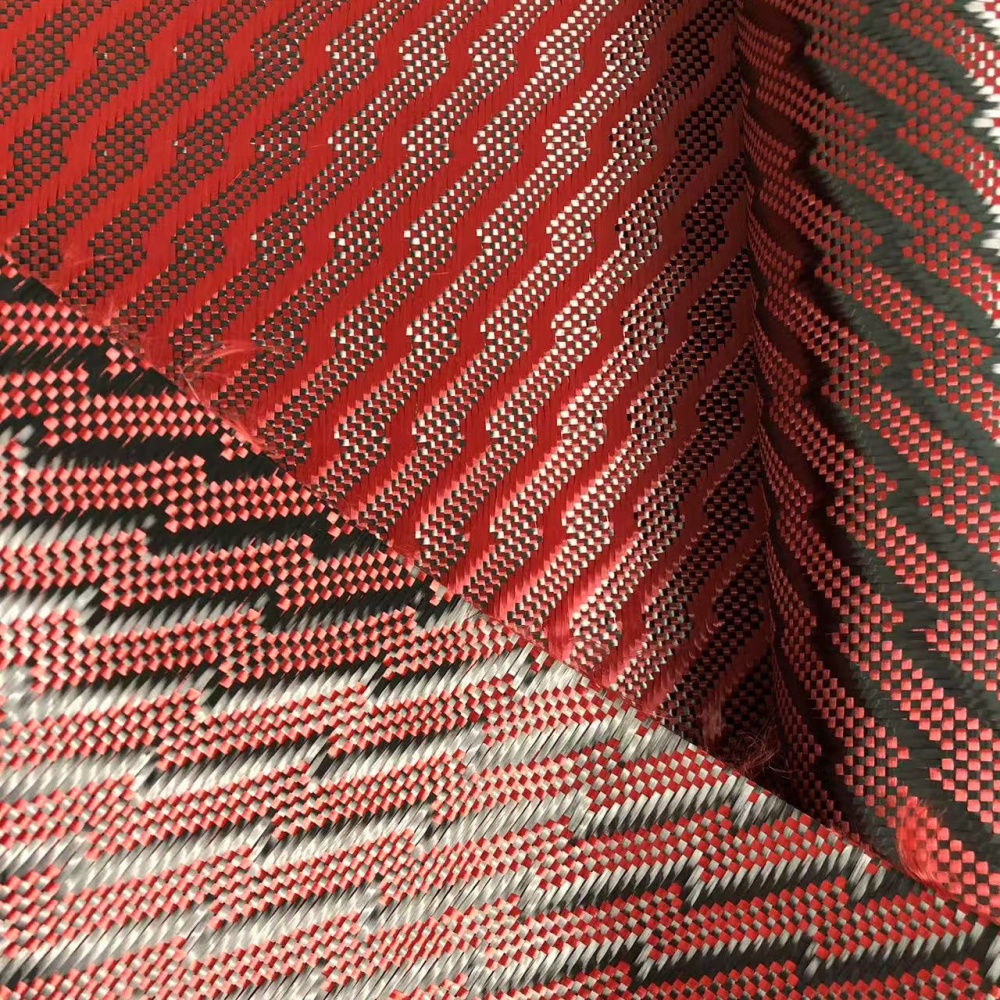
3K 240g Lightning Pattern Jacquard CF Fabric
Hybrid jacquard weave combines structural strength with visual differentiation. Used in automotive interiors, sporting goods, and decorative structural panels.
240 gsm
3K tow
Lightning pattern
View Full Specs →
Applications Where Carbon Fiber Is NOT the Answer
Not every production line needs carbon fiber. Here are the scenarios where choosing CFRP costs more and delivers less.
High-volume, low-load parts. If your component bears minimal structural load and you stamp 50,000 units per day, the processing time and material cost of CFRP make steel or injection-molded plastic the correct choice. Carbon fiber wins on specific strength, but if absolute strength is not the constraint, the weight advantage is irrelevant.
High-temperature continuous service above 300°C. Standard epoxy-matrix CFRP degrades above 180-200°C in sustained operation. Bismaleimide (BMI) and polyimide matrices push the ceiling to 250-300°C, but the cost triples. If your part sits inside an engine bay or furnace, metal still wins.
Parts requiring frequent field repair. CFRP damage assessment requires ultrasonic or X-ray inspection, and field repair needs controlled temperature and humidity. If your maintenance team needs to swap parts in a warehouse parking lot with hand tools, metal is the practical choice.
Budget-constrained prototypes. When you are testing form and function before committing to production, aluminum or 3D-printed polymer gives you iteration speed at 1/10 the material cost. CFRP belongs in the production version, not the prototype.
When to consider hybrid instead. If your application needs impact resistance more than absolute tensile strength, carbon/aramid hybrid fabric delivers better energy absorption at 60-80% of pure CF cost. Ballistic panels, crash structures, and protective housings are the scenarios where hybrid’s combined properties (CF stiffness + aramid impact toughness) outperform either fiber alone. See our fiber comparison guide for the detailed tradeoff analysis.
Before You Switch to Carbon Fiber: A Checklist
FAQ
What is carbon fiber fabric used for most often?
Aerospace structural panels, automotive weight-reduction components, marine hulls and rigging, and concrete column reinforcement wraps. These four sectors account for roughly 75% of global CF fabric consumption per the MarketsandMarkets carbon fiber market report (2024).
Is carbon fiber used in construction?
Yes, but currently in specialized roles: seismic retrofit wraps for concrete columns, bridge deck panels, and cable-stayed bridge tendons. Full structural CFRP beams and columns remain cost-prohibitive for general construction. The sector is growing at 15% annually as installation costs drop.
What industries use carbon fiber the most?
Aerospace and defense lead with ~35% of global demand, followed by automotive (~20%), wind energy (~15%), and marine/sports (~10%). Construction and industrial tooling account for the remaining ~20%.
How does carbon fiber reduce production costs?
Not by reducing material cost (CFRP costs more per kg than steel). It reduces total lifecycle cost through weight-driven fuel savings, longer service intervals (fewer replacements), and corrosion elimination (no coating cycles). On a 20-year horizon, the total cost often comes out 30-40% lower.
Can carbon fiber replace steel in automotive?
In specific components, yes: roof panels, B-pillars, drive shafts, and door intrusion beams. Full-body CFRP replacement remains cost-prohibitive for mass-market vehicles. The current approach is targeted substitution where the weight-to-cost ratio is highest.
Key Takeaways
- Carbon fiber fabric wins on specific strength (5x steel), fatigue resistance (90% retention at 10⁷ cycles), and corrosion immunity, not on raw material cost.
- Aerospace delivers the fastest ROI: ~$1,000/kg/year in fuel savings, 2-3 year payback on a 20-year service life.
- Automotive adoption is limited to targeted components (B-pillars, drive shafts, roof panels) where weight-to-cost ratio is highest.
- Marine applications justify CFRP through eliminated hull maintenance cycles, not speed — a 30-year lifecycle saving can exceed $300,000 per vessel.
- CFRP is NOT the answer for high-volume low-load parts, continuous service above 200°C, or budget-constrained prototypes.
Need application-specific samples? Compare fibers → or Request free CF fabric samples → — We ship aerospace-grade 3K plain and twill reference swatches within 3 business days.