


Carbon Fiber Sheet
IMPACT is one of the most professional carbon fiber sheet manufacturers and suppliers in China. Please feel free to wholesale high quality carbon fiber sheet at competitive price from our factory. For more cheap products, contact us now.
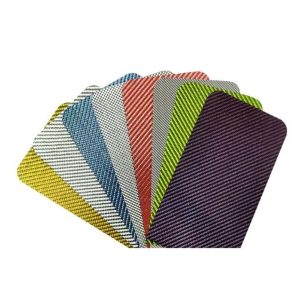
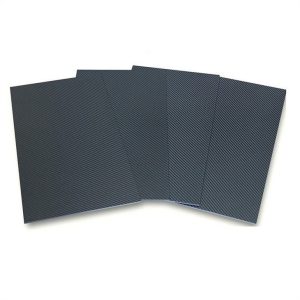
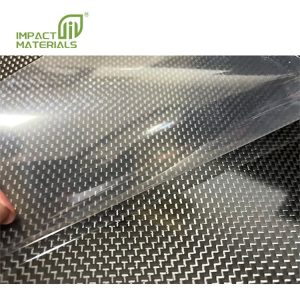
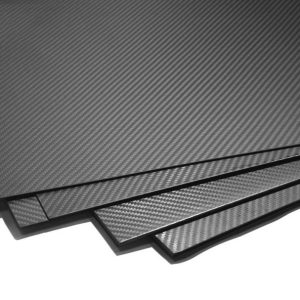
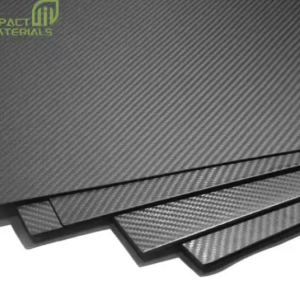
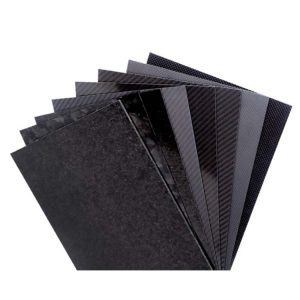
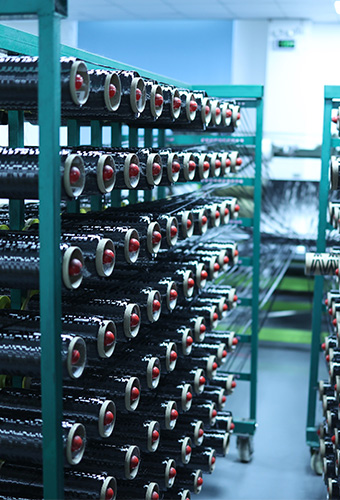
What is carbon fiber?
Carbon fiber is a high – performance material that has gained significant attention in various industries. It is composed mainly of carbon atoms, typically with a carbon content exceeding 90%. These carbon atoms are bonded together in microscopic crystals that are more or less aligned parallel to the long axis of the fiber. This alignment gives carbon fiber its remarkable strength and stiffness.
At the atomic level, carbon fiber has a hexagonal lattice structure similar to graphite. However, unlike graphite, the layers in carbon fiber are not perfectly stacked, which contributes to its unique properties. The basic characteristics of carbon fiber include high tensile strength, low weight, excellent corrosion resistance, and good thermal conductivity.
Due to its low density, carbon fiber is much lighter than traditional materials such as steel and aluminum. Yet, it can withstand extremely high levels of stress without breaking. This combination of light weight and high strength makes it an ideal choice for applications where weight reduction and performance are crucial, such as in aerospace, automotive, and sports equipment industries.
Types of Carbon Fiber
1.Classification by Raw Materials
Carbon fibers can be classified into different types based on their raw materials. One type is rayon – based carbon fiber. Rayon, a regenerated cellulose fiber, serves as the raw material. It has a relatively high oxygen content and a more open structure. The production process involves heating the rayon fibers in an inert atmosphere to remove non – carbon elements. First, the rayon is stabilized at a relatively low temperature, followed by carbonization at higher temperatures. This process results in a carbon fiber with a lower carbon yield but unique properties suitable for some specific applications.
Another common type is polyacrylonitrile (PAN) – based carbon fiber. PAN fibers are the starting material. They have a linear molecular structure and high carbon content. The manufacturing process begins with stretching the PAN fibers to align the molecules. Then, they are oxidized in air at a moderate temperature to form a stable ladder – like structure. Subsequently, carbonization at high temperatures in an inert environment removes non – carbon atoms, leaving behind a high – strength carbon fiber. PAN – based carbon fibers are widely used due to their excellent mechanical properties and high carbon yield.
2.Classification by Characteristics
- Ordinary Carbon Fiber: This type of carbon fiber has relatively average mechanical properties. It has a lower tensile strength and modulus compared to other high – performance carbon fibers. Its applications are often in areas where cost – effectiveness is a priority, such as in some general industrial products and consumer goods. For example, it can be used in the production of simple structural components in machinery.
- High – Strength and High – Modulus Carbon Fiber: As the name suggests, it has extremely high tensile strength and modulus. This makes it suitable for applications where high performance is required. In the aerospace industry, it is used in the manufacturing of aircraft wings and fuselages to reduce weight while maintaining structural integrity. In the sports equipment field, it is used in high – end golf clubs and tennis rackets to enhance the performance of athletes.
3.Classification by Processing Temperature
Carbon fibers can also be classified according to their processing temperatures. Flame – resistant carbon fiber is produced at relatively low processing temperatures, usually in the range of 200 – 300°C. This type of carbon fiber has good flame – retardant properties and is often used in applications where fire safety is important, such as in the interior decoration of public transportation vehicles.
Carbonaceous carbon fiber is processed at intermediate temperatures, typically between 1000 – 1500°C. It has better mechanical properties than flame – resistant carbon fiber and is widely used in general industrial applications, such as in the reinforcement of concrete structures in construction projects.
Graphitic carbon fiber is processed at high temperatures above 2000°C. It has excellent electrical and thermal conductivity, as well as high strength and stiffness. It is commonly used in high – tech fields, such as in the manufacturing of satellite components and high – performance electronic devices.
Applications of Carbon Fiber
1.Aerospace and Aviation
Carbon fiber has revolutionized the aerospace and aviation industries. In aircraft manufacturing, it is extensively used in the production of various components. For instance, in the Airbus A350, carbon fiber composites make up about 53% of the primary structure. This includes the wings, fuselage, and tail sections. The use of carbon fiber in the A350 offers several significant advantages. Firstly, its high strength – to – weight ratio allows for a substantial reduction in the aircraft’s overall weight. A lighter aircraft consumes less fuel, which not only reduces operating costs but also has a positive environmental impact by lowering carbon emissions. Secondly, carbon fiber has excellent fatigue resistance, which means it can withstand repeated stress cycles over a long period without significant degradation. This enhances the safety and durability of the aircraft. In satellite manufacturing, carbon fiber is used in the construction of satellite structures and antennae. Its low thermal expansion coefficient ensures dimensional stability in the extreme temperature variations of space, which is crucial for the accurate operation of satellite equipment.
2.Automotive Industry
Carbon fiber has found its way into the automotive industry, particularly in high – performance and luxury vehicles. It is commonly used in the production of car bodies, chassis, and other critical components. Take the Porsche 918 Spyder as an example. The car’s monocoque chassis is made of carbon fiber – reinforced plastic (CFRP). This material provides exceptional strength while being extremely lightweight. The reduced weight of the chassis improves the car’s power – to – weight ratio, resulting in faster acceleration and better handling. Additionally, carbon fiber’s high stiffness helps to enhance the vehicle’s structural integrity, providing a more stable and comfortable ride. In terms of safety, carbon fiber can absorb and dissipate energy more effectively during a collision, protecting the passengers inside the vehicle. Moreover, the use of carbon fiber in automotive manufacturing also allows for more innovative and aerodynamic designs, which can further improve the vehicle’s performance and fuel efficiency.
3.Sports Equipment
Carbon fiber has had a profound impact on the world of sports equipment. In golf, carbon fiber is used in the shafts of golf clubs. The lightweight nature of carbon fiber allows golfers to swing the club faster, generating more power and distance. At the same time, its high stiffness provides better control over the club’s movement, enabling more accurate shots. In tennis, carbon fiber is used in the frames of tennis rackets. A carbon fiber racket is lighter and more rigid than traditional rackets, which means players can generate more power with less effort. It also helps to dampen vibrations, reducing the risk of injuries such as tennis elbow. In cycling, carbon fiber is used in the frames of bicycles. The light weight and high strength of carbon fiber frames make bicycles more agile and easier to accelerate, giving cyclists a competitive edge in races.
4.Other Applications
Carbon fiber has diverse applications beyond aerospace, automotive, and sports. In medical radiation equipment, carbon fiber is used in the construction of patient tables and radiation shields. Its low density allows for easy movement of the equipment, while its high strength ensures stability. In the medical field, carbon fiber’s radiolucency means it does not interfere with X – ray or CT scans, providing clear images for accurate diagnosis. In the marine industry, carbon fiber is used in the construction of boats and yachts. Its corrosion resistance and high strength – to – weight ratio make it an ideal material for hulls, masts, and other components, improving the performance and durability of the vessels. In the construction industry, carbon fiber is used for structural reinforcement. It can be applied to existing buildings and bridges to increase their load – bearing capacity and extend their service life.